eCommerce
Agonia Records - from halted implementation to a functioning eCommerce platform
Agonia Records is a music label and online store specializing in metal music and its numerous subgenres. The store’s offer includes both music albums and a wide range of merch: T-shirts, flags, and other band-related accessories. The store operates in a B2C model.
Scope of work
B2C Development
Magento 2
PWA
Industry
Music
Year of implementation
2025
The decision to move from the previous, custom-built system to Magento was directly related to the limitations of the former solution. A lack of flexibility and narrow development possibilities made it difficult to expand the store and adapt it to the growing expectations of customers. The migration to Magento was meant to break this deadlock.

When the project arrived at Advox, the implementation was effectively blocked. The previous agency was unable to launch the service, and numerous technical errors made a safe go-live impossible. The main goal was therefore to bring the platform to a stable launch state while maintaining the planned transition to Magento and securing the ability for further development in the next phases.
Set goals:
- Launch of the online store
- Migration to Magento 2
- Reduction of technical debt
Starting point: a project that could not launch
The project was taken over at an advanced implementation stage, but in a condition that made launching sales impossible. The biggest issues were concentrated around three areas: excessive custom code, incorrect data migration, and fragmented documentation.
First of all, the product data migration had been performed incorrectly, resulting in improper configurations of prices, taxes, and their synchronization. The previous store code was written "custom", which introduced many errors affecting key functionalities as well as the overall stability of the platform. Additionally, incorrectly configured external modules—including integration elements important for sales and logistics—made the operation of the store impossible.
Simply put – the project suffered from an excess of custom solutions, some of which duplicated fully native Magento features. These non-optimal solutions unnecessarily complicated the structure of the entire platform, increasing the risk of errors and preventing further development. One of Advox’s key tasks was therefore to remove redundant code and restore consistency with the Magento core, which significantly improved the stability and predictability of the store's performance.
The project had already accumulated around 5 years of history and cooperation with two previous agencies, resulting in a complex codebase, fragmented documentation, and substantial uncertainty regarding the true scope of work required to complete the implementation.
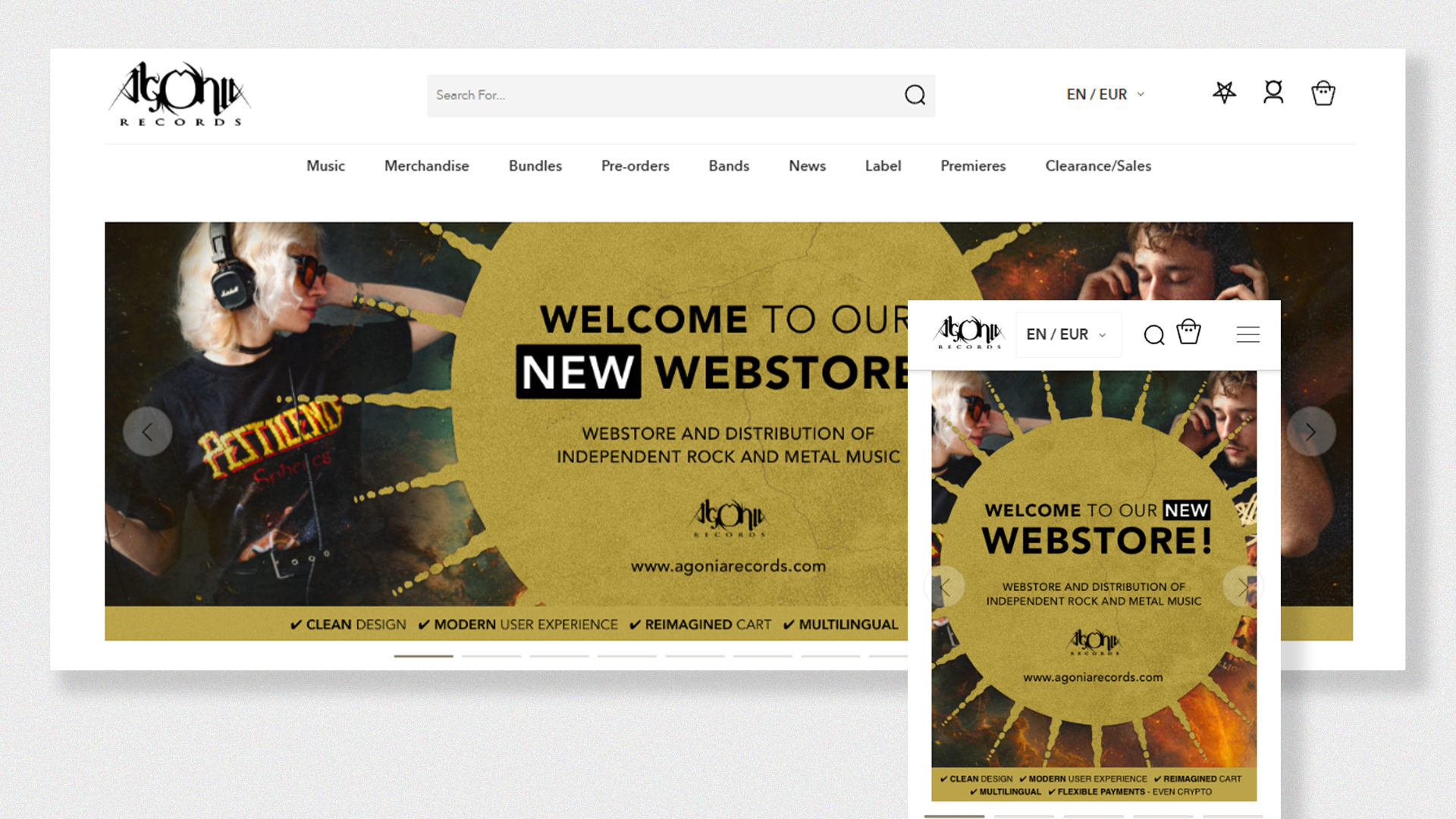
Scope of work and workflow
Advox’s work began with a broad analysis and diagnosis of the issues. The first 2 months were fully dedicated to verifying the code, configuration, and data quality. Only after organizing the full picture of the situation could a realistic scope of corrective actions be planned.
Based on this plan, a comprehensive refactor of faulty code was carried out, the product data migration was redone, and incorrect platform configurations were identified and fixed. Importantly, the work also covered the infrastructure layer: the store was moved from an over-scaled AWS environment to standard hosting to reduce costs on the client side.
The first measurable results appeared after about 3 months, once major errors were removed and the platform began operating stably in pre-production environments. After about 5 months from project takeover, the service was launched within the planned MVP scope.
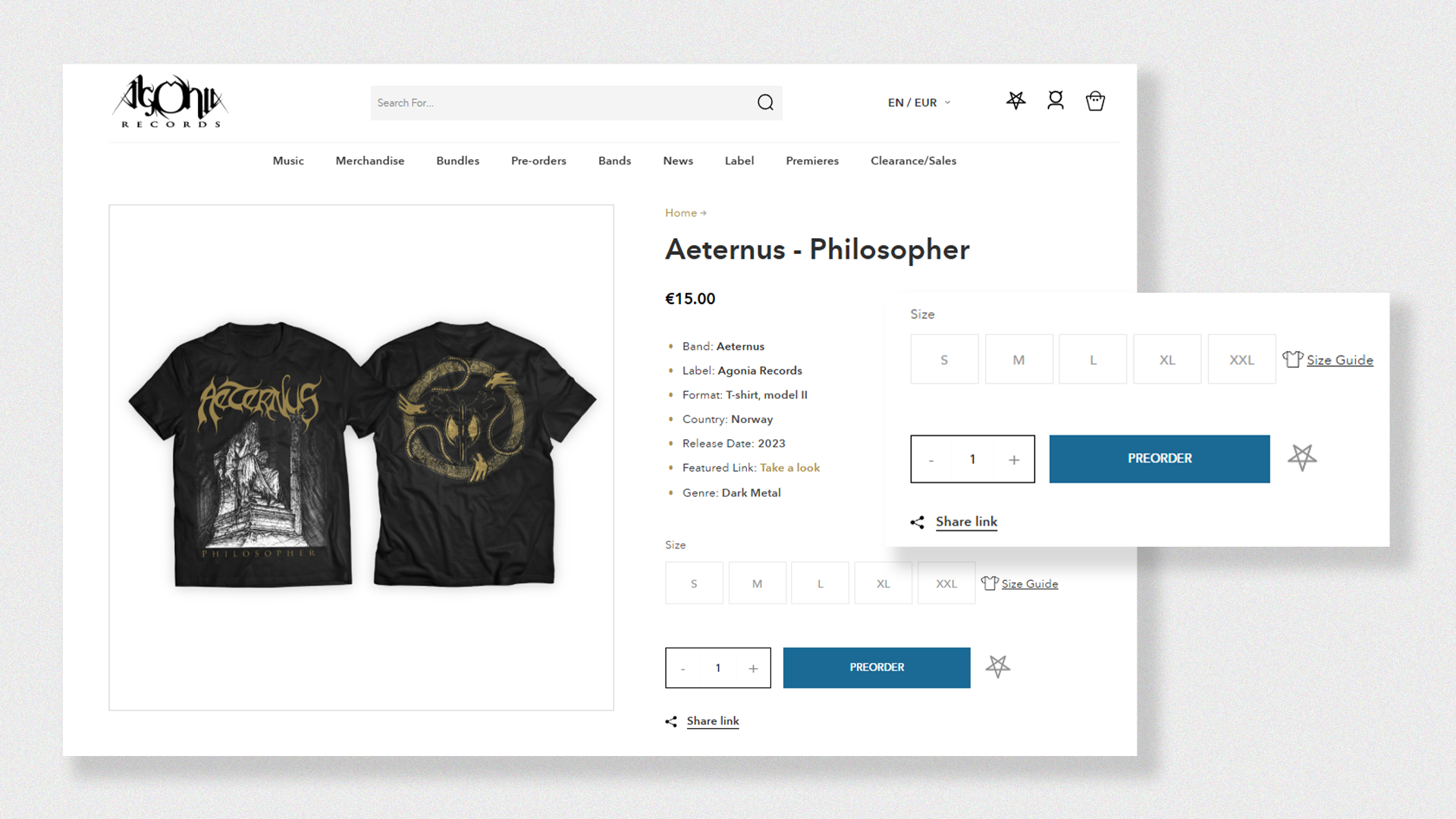
Architecture and technologies
The Agonia Records platform now runs on Magento 2, based on the Luma theme and a custom frontend inherited from the previous vendor. From an architectural perspective, the key decision was to focus not on rebuilding the solution but on stabilizing it. The project was already too advanced to justify designing a brand-new architecture, so the priority became restoring correct operation of the existing components.
Features critical for sales and operations
From a business perspective, the most important area was handling wide geographic reach. The store operates in a multi-website model – separate instances serve the USA market and European countries. This setup allows customization of the offer, payment methods, and delivery options for each market.
On the payment side, several independent providers were implemented, such as PayPal, Stripe, and Zen. For logistics, particular emphasis was placed on integrations with DHL24, DHL Express, GLS, and InPost.
The goal of these activities was primarily to reduce the workload of the store’s support team. Automating payment verification and the shipping process aimed to minimize the number of manual interventions and allow the Agonia Records team to focus on product and customer-related tasks, rather than operational control of every order.
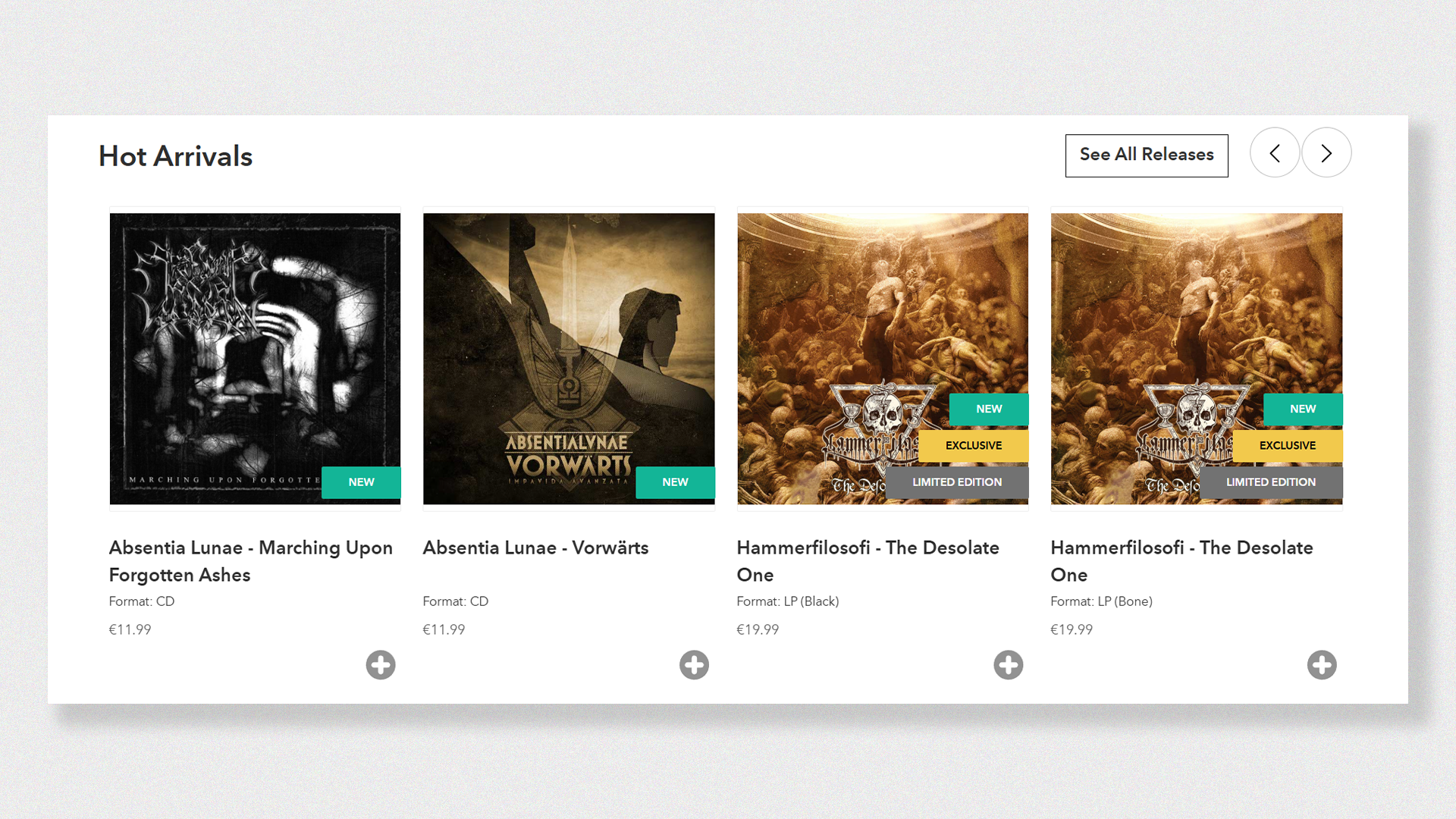
Quality, security, and process
Advox also ensured the digital security of the store. For this purpose, the correctness of the code was verified and the latest available security patches were implemented.
The collaboration process was based on systematic verification and organization of the existing solution. Each change was preceded by an analysis, and its effects were checked in terms of the impact on the store’s stability. This approach gradually reduced the risk of critical errors appearing after launch.
Change management and client communication
One of the main challenges was not the technology itself, but organizing the scope of the project. As verification progressed and new issues were diagnosed, additional areas requiring intervention emerged. The scope therefore had to evolve to cover the actual requirements necessary for launching the service.
Mitigating this risk relied on constant communication with the client. Advox regularly presented action reports and analysis results, and together with Agonia Records defined short-term goals that gradually brought the project closer to achieving the MVP scope and launching the platform. This iterative collaboration model made it possible to maintain control over priorities despite the changing outlook of the work.
Summary
The Agonia Records project was burdened with several significant difficulties. The most important included so-called spaghetti code resulting from years of inconsistent development, and incorrect configuration of improperly migrated data. To effectively address this complexity, Advox divided the project into several large areas and then drilled down into increasingly detailed tasks. After achieving a given goal or completing a verification stage—which could change the understanding of the further scope—consultations with the client followed, and the work plan was adjusted.
This approach made it possible to move the project from a blocked implementation state to a functioning, stable Magento platform. Ultimately, the store was launched within the agreed MVP scope and is now ready for development in the areas of SEO, accessibility, and further system integrations.
Do you have an idea?
Let’s bring it to life! Write to us